Environmental Commitment
Sustainability at VasuSasyam
Circular economy principles, regenerative agriculture, carbon-smart farming, and farmer socioeconomic empowerment — woven into every layer of our operations.
Environmental Commitment
Circular economy principles, regenerative agriculture, carbon-smart farming, and farmer socioeconomic empowerment — woven into every layer of our operations.
Our Approach
We embed sustainability not as a compliance measure, but as the fundamental design principle across all operations.
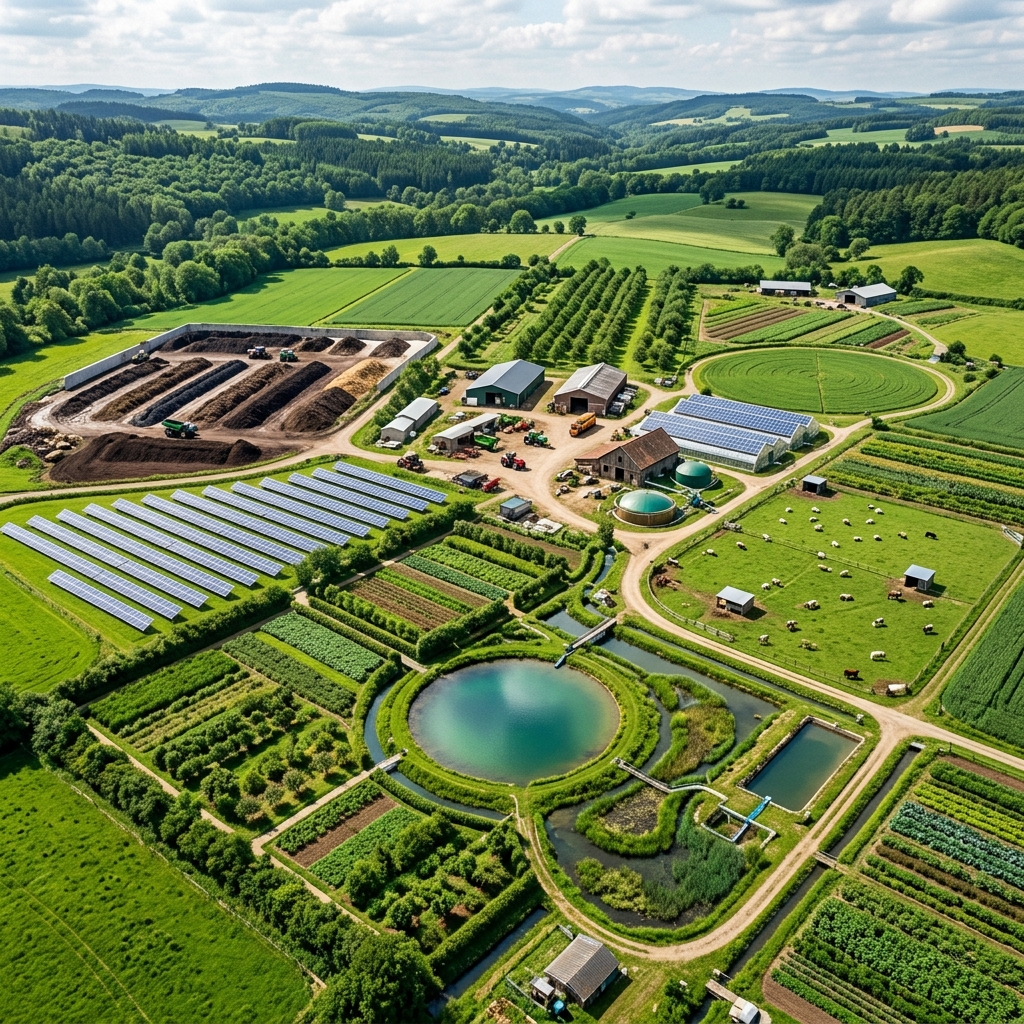
Agricultural waste is systematically channeled as inputs for other divisions — cocopeat, compost, biomass feedstock — creating a zero-waste ecosystem.
Soil restoration through biological inputs, cover cropping, composting, and organic cultivation practices that build long-term land health and biodiversity.
Carbon-conscious crop planning, climate adaptation strategies, and precision water management that reduces agriculture's environmental footprint.
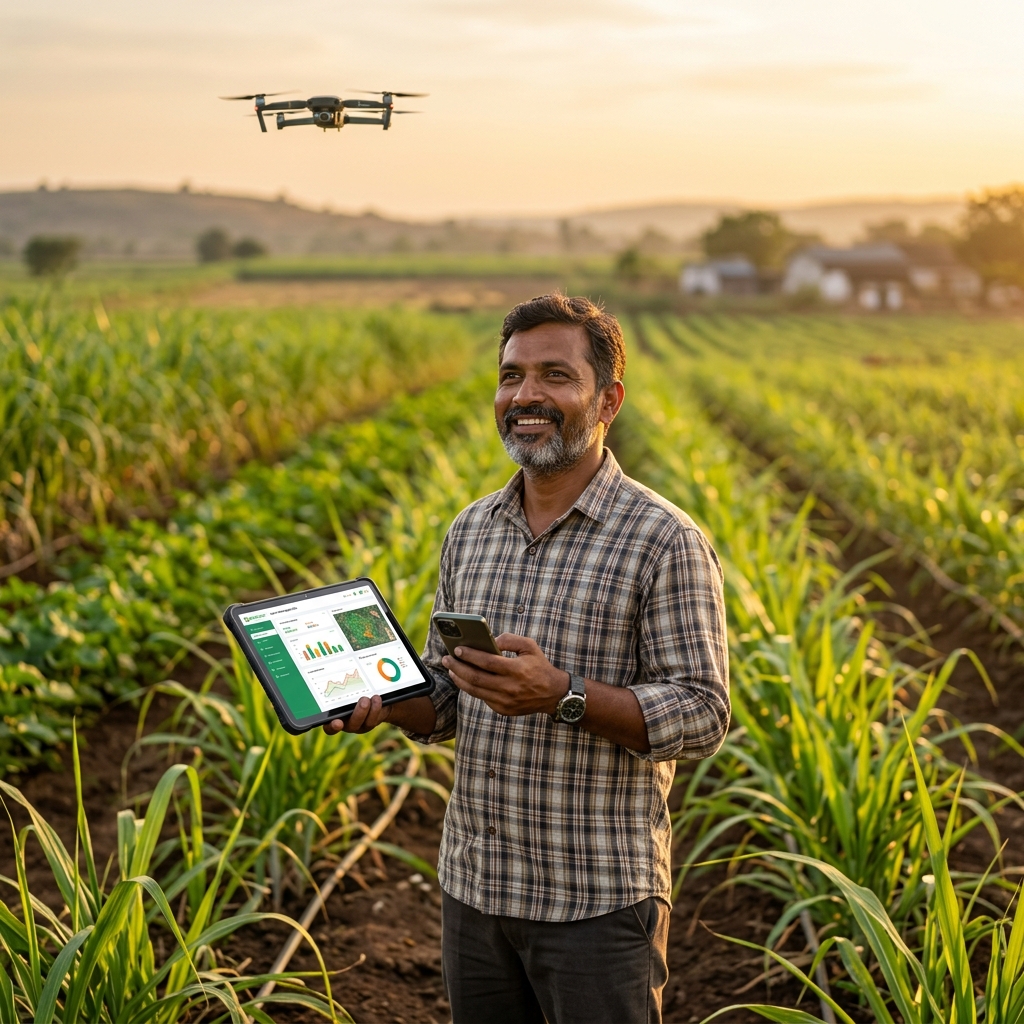
Socioeconomic upliftment through technology transfer, market access, income diversification, and buy-back guarantees that ensure farmer livelihood security.
Agricultural residue transformed into clean energy feedstocks — diverting waste from burning and contributing directly to renewable energy generation.
Research-backed renewable botanical resource mapping, sustainable harvesting protocols, and biodiversity conservation across all cultivation networks.
Circular Model
Every output from one division becomes input for another — a true closed-loop agricultural ecosystem.
Botanical plants, medicinal herbs, and coconut cultivation. Crop residues feed downstream divisions.
Coconut husk → Premium cocopeat for agricultural inputs division and export markets.
Plant matter → Extracts, oils, teas, nutraceuticals. Pomace becomes biomass feedstock.
Organic waste → Vermicompost and biofertilizers. Returns to cultivation as premium soil inputs.
Agricultural residue → Clean biomass feedstock for bioenergy plants. Zero-burn, zero-landfill.
Certified sustainable products reach global markets with full traceability and environmental credentials.
The Core Principle
"Nothing is wasted. Every by-product becomes a value-creating input for another part of our ecosystem."
Our Commitments
100% of crop residues directed to composting, biomass aggregation, or value-added processing.
Supporting conventional farmers in certified organic transition through our subscription technology program.
Scale biomass aggregation network to supply clean feedstock equivalent to powering 5,000 homes.
Carbon offsetting through regenerative agriculture, biomass feedstock diversion, and renewable energy adoption across all facilities.
Farmer Socioeconomic Empowerment
True sustainability must be economically sustainable for farmers too. Our model ensures that environmental practices directly translate to improved farmer income, market security, and knowledge empowerment.
Multiple crop streams + buy-back guarantees that reduce farmer income risk significantly.
Exclusive training programs, field visits, and proprietary technology documentation provided to all partners.
Direct linkages to B2B buyers, export channels, and organized market networks — bypassing exploitative intermediaries.